
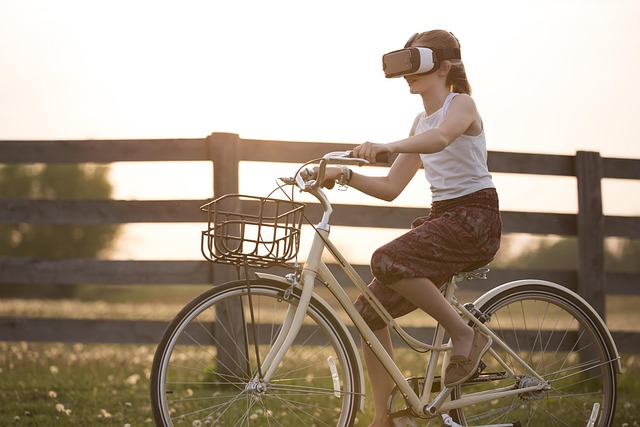

For many educators, the idea of immersing students in a digital world feels like a distant fantasy. Yet, virtual reality as an educational tool has evolved from experimental prototypes into practical classroom solutions. By overlaying digital content onto the physical environment or transporting learners into entirely simulated spaces, VR expands the boundaries of traditional instruction. Its capacity to make abstract concepts tangible, to simulate complex systems, and to foster collaborative exploration positions it as a transformative force in education.
Understanding the Core Technologies
To appreciate how virtual reality functions in learning contexts, it is helpful to outline the three key technologies that underpin the experience: virtual reality (VR), augmented reality (AR), and the broader metaverse. VR creates a fully immersive, computer-generated environment that replaces the user’s physical surroundings. AR superimposes digital information onto the real world, allowing users to interact with both simultaneously. The metaverse builds on these foundations, offering persistent, shared virtual spaces that enable extended social, economic, and educational interactions.
- Virtual Reality: Head‑mounted displays, motion tracking, and spatial audio create a 360° environment.
- Augmented Reality: Smartphone cameras or smart glasses overlay 3D models onto real scenes.
- Metaverse: A persistent, interconnected network of virtual worlds where users can attend lectures, collaborate on projects, or explore cultural heritage sites.
VR as an Educational Tool: Core Benefits
Virtual reality’s ability to situate learners in lifelike contexts leads to several pedagogical advantages. First, it enhances spatial understanding; students can walk through a historic monument, manipulate a chemical reaction, or visualize the inner workings of a heart. Second, experiential learning is amplified; learners engage in practice scenarios that would be impossible or costly in the real world, such as piloting an aircraft or conducting delicate surgical procedures. Third, VR can foster empathy by placing users in the perspective of marginalized groups or distant cultures.
Case Studies in Classroom Integration
Numerous schools have piloted VR lessons with measurable outcomes. In a middle‑school science class, students used a VR module to explore the solar system, resulting in a 25% increase in conceptual retention compared to textbook learning. In a university anthropology course, a VR reconstruction of an archaeological dig allowed students to interact with artifacts and interpret contextual clues, leading to higher engagement scores. These examples illustrate how virtual reality as an educational tool can translate complex theories into accessible, memorable experiences.
“The immersion made the ancient city feel alive,” notes a student who spent time navigating a virtual reconstruction of Pompeii. “I could see how people moved and used space.”
Augmented Reality: Bridging the Digital and Physical
While VR offers complete immersion, AR enhances the real environment with digital layers. This hybrid approach can support in‑situ learning where students interact with physical objects and receive instant, context‑sensitive feedback. For instance, in a biology lab, AR can overlay the 3D structure of a protein onto a microscope slide, enabling students to annotate and manipulate the model in real time. Because AR preserves the real world, it is often more accessible to institutions with limited resources, requiring only smartphones or lightweight glasses.
Practical Applications of AR in Education
Ars educators are experimenting with AR in subjects ranging from math to history. A geometry teacher can have students use a tablet to view a 3D representation of a tetrahedron, rotating it and exploring its properties. In a history class, AR overlays historical photographs onto current streets, allowing students to visualize changes over time. By combining physical manipulation with digital enhancement, AR serves as a powerful educational tool that complements VR rather than competes with it.
The Metaverse: A New Learning Ecosystem
The metaverse expands beyond isolated VR or AR experiences into a connected, persistent virtual environment where learners can meet, collaborate, and pursue education as a social activity. In such spaces, virtual classrooms can be scheduled, study groups can form across continents, and professors can host live events that participants attend in real time. Moreover, the metaverse supports the creation of open educational resources that are accessible to anyone with an internet connection.
Implications for Pedagogical Design
Designing for the metaverse demands a shift in thinking. Educators must consider not only content delivery but also community building, identity management, and digital citizenship. Lessons must be modular, allowing students to join or leave at will, and should incorporate collaborative problem‑solving that leverages the unique affordances of shared virtual space. Moreover, instructors need training in virtual facilitation, moderating interactions, and troubleshooting technical issues that arise in real time.
Pedagogical Theories Supporting VR Integration
Several learning theories provide a framework for understanding why virtual reality as an educational tool can be effective. Constructivist theory posits that learners build knowledge through active engagement and reflection. VR environments encourage such active participation, allowing students to experiment, observe consequences, and receive immediate feedback. Experiential learning theory, championed by Kolb, emphasizes the cycle of concrete experience, reflective observation, abstract conceptualization, and active experimentation—all of which VR naturally facilitates. Social constructivism, too, is reinforced in the metaverse, where learners co‑construct meaning through interaction.
Challenges and Considerations
Despite its promise, virtual reality as an educational tool faces hurdles. Hardware costs, though decreasing, remain significant for many institutions. Accessibility issues arise for students with motion sickness, visual impairments, or limited mobility. Additionally, content development requires specialized skills; educators often lack training in 3D modeling or interactive design. Pedagogical alignment is essential: VR experiences must be thoughtfully integrated into curriculum objectives rather than added as an afterthought. Finally, data privacy and digital safety become more complex in persistent virtual worlds.
Strategies to Overcome Barriers
To address these challenges, schools can adopt a phased implementation. Starting with low‑cost AR projects that use existing devices can build familiarity. Partnering with educational content providers or open‑source communities can reduce development time. Professional development for teachers should include instruction on VR authoring tools, instructional design for immersive learning, and ethical considerations. Moreover, institutions can explore shared infrastructure models, such as regional VR hubs, to spread costs and expertise.
Future Trends in VR, AR, and the Metaverse
The trajectory of these technologies points toward greater realism, affordability, and integration. Advances in eye‑tracking, haptic feedback, and wireless streaming will make VR headsets lighter, more comfortable, and less tethered. AR glasses will become mainstream, providing hands‑free overlays for classroom and fieldwork. The metaverse will mature into an ecosystem where educational content, certification, and social interactions are seamlessly intertwined. As standards emerge for interoperability, educators will be able to mix and match tools from different vendors without reinventing the wheel.
Implications for Lifelong Learning
Beyond K‑12 and higher education, VR and AR are poised to redefine lifelong learning. Professionals can engage in virtual training simulations that replicate high‑stakes environments, from flight simulators to emergency response drills. Learners can attend virtual conferences, collaborate on research projects, or explore cultural heritage sites without leaving their homes. The metaverse will offer flexible, learner‑centered pathways where skills are demonstrated in immersive contexts, making assessment more authentic and transferable.
Conclusion
Virtual reality as an educational tool holds immense potential to transform how knowledge is experienced, understood, and applied. By combining VR’s immersive capacity, AR’s contextual augmentation, and the collaborative fabric of the metaverse, educators can craft learning environments that are engaging, inclusive, and deeply aligned with modern pedagogical principles. While challenges remain, strategic investment in technology, training, and curriculum design will unlock a future where every learner can explore the world—both real and virtual—in ways that were once unimaginable.