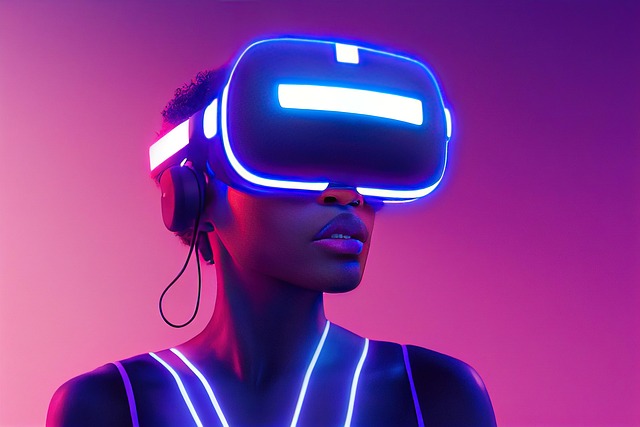


Immersive science is reshaping the way researchers and learners interact with complex concepts, enabling them to inhabit data, models, and phenomena in three‑dimensional space. By harnessing virtual reality (VR), augmented reality (AR), and the emerging metaverse, the discipline transcends traditional laboratory boundaries, offering unprecedented immediacy and sensory richness. This article explores the technologies that fuel immersive science, examines their current applications, and considers the ethical, practical, and visionary challenges that accompany their growth.
The Foundations of Immersive Science
At its core, immersive science relies on three pillars: spatial computing, haptic feedback, and real‑time data integration. Spatial computing provides the coordinates and orientation necessary for an avatar or sensor to navigate virtual space, while haptic devices translate touch and force into tangible sensations. Real‑time data integration connects these elements to live scientific streams—such as particle physics simulations or ecological sensor feeds—allowing participants to see, feel, and react to evolving variables. When combined, these pillars give rise to a sense of presence that traditional 2‑D interfaces struggle to emulate.
- Spatial Mapping: 3‑D reconstruction of environments using LiDAR, photogrammetry, or SLAM algorithms.
- Haptic Rendering: Force‑feedback gloves, exoskeletons, or localized vibration units that convey texture, weight, and resistance.
- Data Fusion: APIs and middleware that stream observational, experimental, and simulation data into a unified virtual context.
Virtual Reality: Simulating Realities
Virtual reality immerses users within entirely synthetic worlds. In scientific contexts, VR has been instrumental for visualizing abstract constructs—such as molecular orbitals, celestial mechanics, or quantum entanglement—in a way that allows manipulation and observation from multiple angles. A notable example is the use of VR to explore protein folding pathways: researchers can walk through a protein’s tertiary structure, observe folding intermediates, and even simulate mutations by altering amino acid residues in real time. Such experiences provide intuition that purely numerical or 2‑D graphical representations cannot convey.
“When I first stepped inside a VR simulation of a black hole accretion disk, the gravitational lensing seemed almost tangible. It was as if the physics became a sculptural form I could explore.” – Dr. Elena Marquez, Astrophysics Laboratory
Augmented Reality: Layering Information
Augmented reality overlays digital content onto the physical world, enhancing real‑time perception without fully replacing it. In the realm of immersive science, AR enables field scientists to annotate geological formations, medical professionals to visualize internal anatomy during surgery, and educators to superimpose interactive models onto classroom desks. By integrating sensor data—such as GPS coordinates, temperature, or biometrics—AR systems can provide contextually relevant overlays that adapt to user actions and environmental changes. The result is a hybrid experience where data and reality coexist fluidly.
- Field Data Annotation: Drones capture aerial imagery; AR apps project geological layers and measurement points onto the terrain.
- Medical Visualization: Surgeons wear AR glasses that render patient imaging directly onto the operative field, improving precision.
- Educational Interaction: Students point tablets at a model of the solar system, triggering animations of orbital dynamics.
The Metaverse: A Unified Space
The metaverse represents the next evolutionary step beyond isolated VR and AR experiences—a persistent, shared virtual environment where users can collaborate, create, and conduct research across disciplines. For immersive science, the metaverse offers a platform for multi‑institutional labs that can share equipment, data, and even entire experimental setups in real time. Imagine a global molecular biology consortium where researchers from different continents can jointly manipulate a single virtual specimen, observing reactions as they happen, regardless of physical distance. This level of collaboration accelerates discovery and democratizes access to high‑end resources.
“The metaverse is not just a new playground; it’s a new laboratory where the walls of geography and budget are dissolving.” – Prof. Amir Khan, Computational Sciences Institute
Scientific Research in Immersive Environments
Immersive science is already producing tangible outcomes across several fields. In materials science, VR environments allow chemists to model crystal lattices and observe defect formation. Neuroscientists employ AR to track neural activity in real time during behavioral experiments, overlaying functional data onto the animal’s live video feed. Climate scientists build immersive dashboards where users can manipulate variables like CO₂ concentration and immediately see projected temperature changes across a 3‑D globe. These applications demonstrate that immersive tools do not merely provide aesthetic appeal; they enhance data comprehension, hypothesis testing, and collaborative problem‑solving.
- Materials design: VR-guided exploration of phase diagrams.
- Neuroscience: AR‑augmented recordings of electrophysiological signals.
- Climate modeling: immersive visualizations of atmospheric circulation patterns.
Ethical and Social Implications
With great power comes great responsibility. Immersive science raises questions about data privacy, equitable access, and the potential for cognitive biases. For instance, the immersive representation of data may unintentionally oversimplify complex statistical distributions, leading to misinterpretation. Additionally, the high cost of VR and AR hardware can widen the digital divide, leaving underfunded institutions and developing regions at a disadvantage. Ethical frameworks are emerging that advocate for open‑source toolkits, transparent data provenance, and inclusive design principles to mitigate these concerns. Researchers must be vigilant that immersive tools augment, rather than replace, rigorous scientific methodology.
- Data Fidelity: Ensuring that visual representations faithfully capture underlying metrics.
- Accessibility: Developing low‑cost, cross‑platform solutions to democratize participation.
- Governance: Establishing standards for user consent, data sharing, and intellectual property within virtual spaces.
Future Horizons
Looking ahead, several technological trajectories promise to deepen the impact of immersive science. Neural‑interface devices may allow researchers to control virtual environments with thought alone, eliminating physical peripherals and opening doors for individuals with mobility impairments. Advances in photorealistic rendering and haptic bandwidth will make virtual molecules feel as tangible as real specimens, enabling tactile learning at the nano‑scale. Meanwhile, decentralized blockchain platforms could underpin secure, immutable records of experimental data shared across the metaverse, fostering trust and reproducibility. As these innovations converge, immersive science will move from a niche exploratory tool to a mainstream cornerstone of research, education, and societal advancement.
“When you can feel a molecule’s bond as if it were a physical object, the line between imagination and reality blurs, and new questions emerge that we couldn’t have conceived before.” – Dr. Sofia Patel, Bioengineering Institute
In sum, immersive science sits at the intersection of human perception and computational ingenuity. By leveraging virtual reality, augmented reality, and the expansive potential of the metaverse, scientists are redefining how data is visualized, experimented upon, and shared. The field’s trajectory suggests a future where the boundaries between observer, subject, and environment dissolve, empowering a generation of researchers to experience science in the most literal sense—through presence, touch, and collaborative immersion. As we stand on the cusp of this transformation, it is incumbent upon the scientific community to steward the technology responsibly, ensuring that immersive tools serve curiosity, inclusivity, and the relentless pursuit of knowledge.