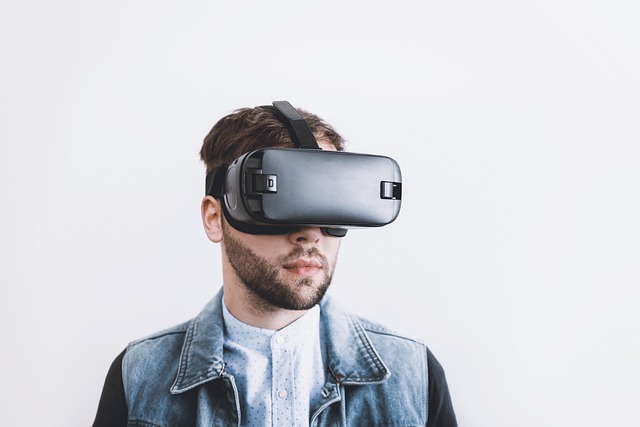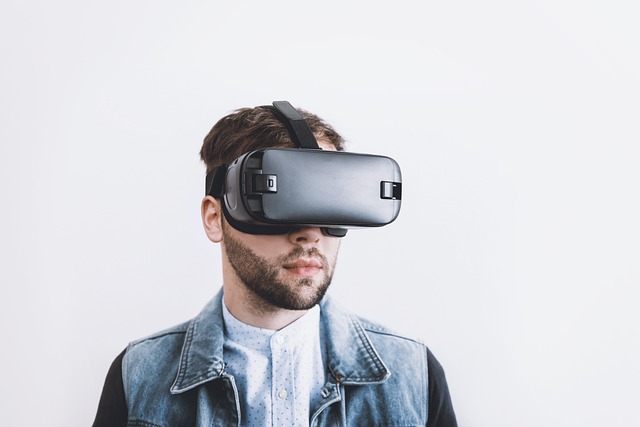


Immersive virtual environments are no longer a niche playground for gamers or tech enthusiasts; they are becoming integral to education, healthcare, corporate training, and social interaction. When a user steps into a virtual reality (VR) headset or overlays digital information onto the real world through augmented reality (AR), their brain is presented with a new set of stimuli that can reshape perception, memory, and decision making. The core of this transformation lies in what psychologists call the cognitive experience—the way the mind processes, stores, and retrieves information within a simulated context.
Understanding the Cognitive Experience in Virtual Reality
Virtual reality offers a fully immersive canvas where users can manipulate objects, explore vast landscapes, or inhabit alternate personalities. Cognitive science tells us that immersion is largely mediated by the brain’s sense of presence—a psychological state where virtual cues are treated as real. When presence is strong, the brain engages similar neural pathways as it does in the physical world, especially in the parietal and occipital lobes that handle spatial awareness and visual processing.
- Attention allocation: VR environments can train selective attention by directing gaze to task-relevant elements while filtering out distractions.
- Working memory load: Interactive tasks that require real-time decision making increase working memory demands, which can improve executive function when practiced regularly.
- Emotional resonance: The visceral nature of VR can evoke emotions that reinforce learning, making abstract concepts tangible.
The Role of Augmented Reality in Shaping Perception
Augmented reality layers digital information onto the physical environment, creating a hybrid experience that blurs the line between the real and the virtual. Unlike VR’s complete enclosure, AR maintains a continuous link to the user’s surroundings, demanding that the brain constantly reconcile two streams of sensory input. This dual engagement can lead to heightened situational awareness but also introduces potential cognitive overload.
“When AR overlays complex data on a busy street, the brain must decide which information to prioritize, leading to a dynamic reallocation of attentional resources.” — Dr. Elena Ruiz, Cognitive Neuroscience Lab
Researchers have found that AR can enhance spatial memory by anchoring virtual cues to real-world landmarks. However, the simultaneous processing of real and virtual stimuli can tax the prefrontal cortex, especially if the interface is cluttered or unintuitive. The design of AR systems must therefore balance richness of content with cognitive economy to preserve a smooth user experience.
Metaversum: The Convergence of Simulation and Social Cognition
The emerging concept of a metaverse—a persistent, shared digital space—takes simulation to a collective level. Here, users don digital avatars and participate in social interactions that mimic, or even extend, real-world behavior. This environment intensifies the cognitive experience in several ways:
- Social presence: The illusion of being co-located with others activates mirror neuron systems, facilitating empathy and theory of mind.
- Identity reconstruction: Avatars allow users to experiment with self-presentation, prompting exploration of self-concept and identity fluidity.
- Collective learning: Collaborative tasks in the metaverse require shared attention and joint problem solving, fostering group cognition.
While the metaverse promises rich educational and therapeutic possibilities, it also raises questions about attention fragmentation and the potential for “digital echo chambers,” where users interact primarily with like-minded peers, reinforcing cognitive biases.
Design Principles for Enhancing Cognitive Experience
To harness the benefits of VR, AR, and the metaverse, designers must consider the cognitive load model. A well-balanced interface keeps the intrinsic load—the information inherent to the task—manageable while minimizing extraneous load—unnecessary distractions. Key strategies include:
- Contextual cues: Use environmental storytelling to guide users through complex tasks without explicit instructions.
- Adaptive difficulty: Dynamically adjust task complexity based on real-time performance metrics to keep users in the “flow” zone.
- Multisensory congruence: Align visual, auditory, and haptic feedback to reinforce spatial relationships and reduce perceptual conflict.
These principles help ensure that the cognitive experience remains engaging rather than overwhelming, promoting deeper learning and skill transfer.
Future Directions: From Cognitive Training to Ethical Considerations
As simulation technologies mature, researchers are exploring targeted cognitive training programs that leverage VR and AR. For example, exposure therapy for anxiety disorders uses virtual scenarios to gradually reduce fear responses, while AR overlays can aid memory recall in dementia care. In corporate settings, VR simulations are being adopted for leadership development, conflict resolution, and complex systems management.
However, the expanding reach of immersive media brings ethical challenges. Prolonged exposure may alter perception of time and space, potentially leading to dissociation or “digital fatigue.” Moreover, the metaverse’s capacity to influence social identity and reinforce ideological echo chambers necessitates thoughtful governance and inclusive design.
In the near future, we anticipate the integration of biofeedback sensors into immersive platforms, allowing real-time monitoring of heart rate, galvanic skin response, and neural activity. Such data will enable adaptive environments that respond to the user’s emotional and cognitive state, creating a truly personalized cognitive experience.