
Category: Simulation
Close your eyes for a moment and imagine standing on the command deck of a star-cruiser, the hum of the engines resonating under your feet. You glance left to your co-pilot, right to a shimmering nebula, and then down to your own hands as they manipulate holographic controls in perfect synchrony with the ship’s real-time response. That electric rush you feel—that is the promise of the next-generation real-time simulation game, a genre that no longer merely pretends to imitate reality but folds you inside it.
Virtual Reality: Wearing the World
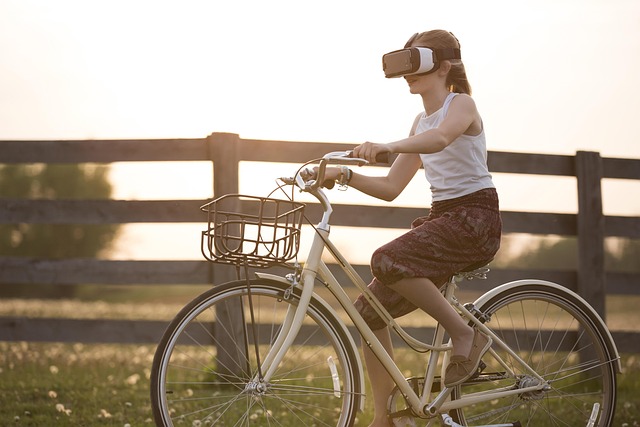
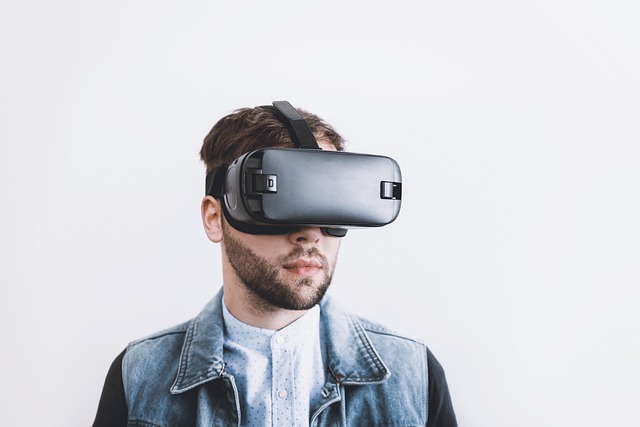
In the realm of virtual reality, the headset is more than hardware; it is your passport to fully realized, reactive universes. Modern VR engines stream physics calculations, AI behaviors, weather systems, and multiplayer inputs at millisecond latency, so when you tilt your head or lift a controller, the entire digital world recalibrates instantly. Imagine piloting a helicopter through a storm where every gust tangibly rocks the cockpit, or running a medieval village where day-night cycles, crop yields, and resident moods play out in uninterrupted real time. The simulation isn’t just seen—it’s worn like a second skin, convincing the body to tense, sway, and even forget, briefly, that there is a living room couch just inches away.
Augmented Reality: Layering the Impossible on the Everyday
While VR encloses you, augmented reality coexists with your living spaces. Slip on lightweight AR glasses, and your kitchen counter might become the bridge of that star-cruiser, your coffee mug a fuel-cell monitor. The magic of a real-time simulation game in AR is context awareness: sensors map the geometry of your environment, then bind digital systems—economies, ecosystems, tactical overlays—to every surface in view. You might manage a micro-scale city that sprawls across your dining table, watching cars reroute around your salt shaker and citizens gather near your laptop “park.” Because AR uses the textures, lighting, and acoustics of the real world, immersion feels effortless, like discovering a secret layer of reality that was always there, waiting to be revealed.
The Metaverse: Infinite Continuity
Now merge VR’s depth and AR’s ubiquity into a persistent, shared network of worlds: the metaverse. Here, simulation means continuity; every action you take is recorded on decentralized servers and replicated for every other participant. Grow a biodome on Mars in one session, and hours later a fellow explorer can harvest oxygen from it in theirs. Architectural firms prototype buildings at life scale, gamers repurpose them as race tracks, educators turn them into history museums—interoperability becomes culture. In a real-time simulation game woven into the metaverse, the boundary between user and creator dissolves. Your decisions ripple outward, forging economies, folklore, and even political structures that endure whether you are logged in or not.
Emotional Resonance and Embodied Presence
The technical marvels are dazzling, yet the true magic lies in sensation: the flutter in your chest when an AI teammate thanks you by name, the adrenaline spike when a dragon’s roar echoes around the walls of your actual bedroom, the quiet awe of watching a sunrise coded by someone on the other side of the planet. The Simulation category has always prized fidelity and systems thinking, but VR, AR, and the metaverse add empathy and embodiment to the mix. They invite players to step not just into another role, but into an alternate ontology where choices matter, histories persist, and the line between “play” and “life” smudges just enough to make everything feel a little more alive.