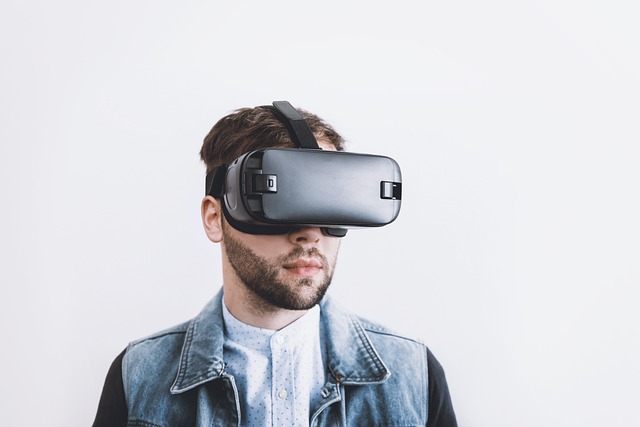


When we think of the future of digital interaction, the term “3D world” often surfaces as the gateway to a new kind of experience. The convergence of virtual reality (VR), augmented reality (AR), and the broader metaverse vision is reshaping how we learn, work, play, and connect. By immersing ourselves in these evolving platforms, we can begin to understand not only the technical underpinnings of simulation but also the philosophical shifts they bring to human perception.
Foundations of Simulation in the 3D World
At its core, simulation in a 3D world is the recreation of real or imagined environments that respond to user input in real time. The three pillars that sustain this experience are spatial rendering, physics engines, and sensory feedback. Together, they provide a coherent illusion of presence—a sensation that one is truly inside a virtual space rather than merely observing it from the outside.
- Spatial Rendering: High-fidelity graphics engines produce detailed meshes, textures, and lighting that mimic the complexity of the real world.
- Physics Engines: They calculate realistic interactions—gravity, collision, fluid dynamics—allowing objects to behave predictably when users manipulate them.
- Sensory Feedback: Haptic gloves, motion tracking, and spatial audio translate the simulation into physical sensations, deepening immersion.
Virtual Reality: Immersive Boundaries
VR devices—head-mounted displays, hand controllers, and full-body suits—provide an all-encompassing visual and auditory field. By blocking out external stimuli, these systems create a “headless” environment where the user’s mind accepts the virtual world as reality. The key to successful VR lies in maintaining a high frame rate and reducing latency; otherwise, the illusion fractures, and cybersickness can set in.
“The most powerful aspect of VR is that it can make you feel physically present in a place that doesn’t exist,” says Dr. Elena Morales, a cognitive neuroscientist studying embodied perception.
Augmented Reality: Overlaying the Digital
AR differs fundamentally by superimposing digital elements onto the real world. Smartphone screens, smart glasses, and head-up displays enable AR to blend seamlessly with the environment, providing context-sensitive information without isolating the user. The 3D world in AR becomes a hybrid—real and virtual intertwined. This blend has found extensive application in fields ranging from industrial maintenance to educational tours.
- Industrial maintenance: Technicians view holographic schematics over machinery, guiding repairs in real time.
- Education: Students explore anatomical models layered over a classroom, making complex concepts tangible.
- Navigation: Real-time route overlays help users traverse unfamiliar cities with minimal distraction.
Metaverse: The Next Layer of Interaction
The metaverse represents the evolution of digital spaces into a persistent, shared environment that transcends individual devices. Unlike standalone VR or AR experiences, the metaverse allows multiple users to inhabit a 3D world simultaneously, sharing actions, emotions, and commerce. Economies flourish as digital assets—avatars, virtual real estate, and NFTs—gain tangible value.
Economic Opportunities in the 3D Metaverse
One of the most transformative aspects of the metaverse is its open economy. Users can create, sell, or trade digital items, turning creative talent into income streams. Platforms such as Decentraland, Roblox, and Meta’s Horizon Worlds showcase the diversity of marketplaces—from fashion to architecture.
- Digital fashion: Designers can sell clothing for avatars, offering endless customization options.
- Virtual real estate: Investors purchase plots of land in popular worlds, developing entertainment or retail spaces.
- Content creation: Game developers monetize immersive experiences through subscriptions or microtransactions.
Social Dynamics in Persistent 3D Worlds
As these 3D worlds grow more complex, social interactions take center stage. Users form communities, collaborate on projects, and even hold virtual events. The sense of presence in a shared space fosters authentic relationships that can cross geographical boundaries.
“When people interact in a 3D world, the sense of ‘here’ makes collaboration more natural than through text alone,” notes sociologist Priya Desai.
Challenges to Realizing Full Immersion
Despite rapid progress, several technical and ethical challenges remain. Rendering fidelity demands substantial computational power, pushing developers toward cloud solutions or specialized hardware. Privacy concerns arise as immersive systems capture extensive biometric data—eye movement, heart rate, and more—requiring robust safeguards.
- Bandwidth constraints: Streaming high-resolution 3D scenes to multiple users without lag remains costly.
- Data security: Protecting user identities and interactions against hacking is paramount.
- Digital divide: Unequal access to VR/AR hardware could exacerbate socioeconomic gaps.
Future Directions: From Simulation to Co-Creation
Looking ahead, the simulation of 3D worlds is expected to shift toward participatory design. Instead of pre-built environments, users will co-create landscapes through intuitive tools, employing AI assistance to generate architecture, flora, and dynamic events. This democratization of creation could unlock unprecedented diversity of experiences.
- AI-Driven Worldbuilding: Algorithms suggest terrain and structures based on user preferences.
- Procedural Content Generation: Dynamic events, such as weather or emergent narratives, evolve organically.
- Collaborative Editing: Multiple creators can edit a shared space in real time, refining details collaboratively.
Conclusion: Embracing the 3D World of Tomorrow
The fusion of VR, AR, and the metaverse is redefining the simulation landscape, offering more than just visual spectacle. It promises new economic models, altered social frameworks, and fresh ways of perceiving reality. As developers, policymakers, and users navigate these waters, maintaining ethical standards and inclusive access will be essential. Ultimately, the promise of the 3D world is not a mere technological novelty; it is a catalyst for human innovation, creativity, and connection in ways we are only beginning to imagine.