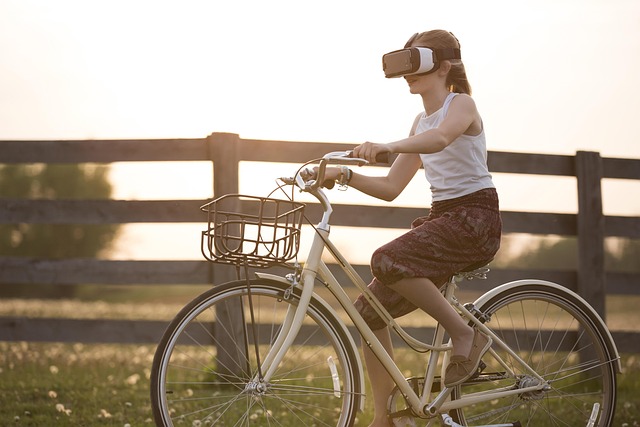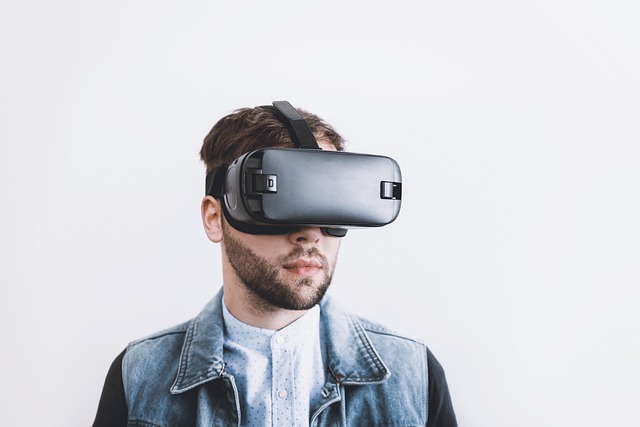
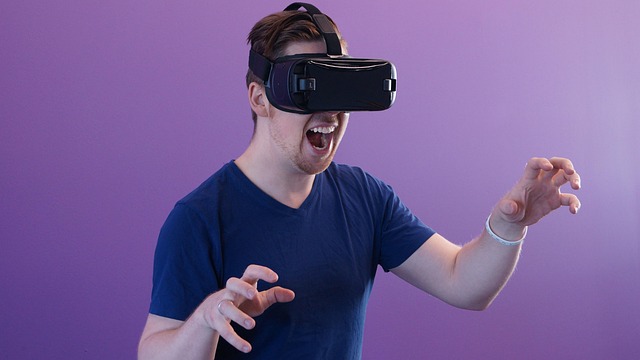

Virtual reality (VR) and augmented reality (AR) have evolved from niche research tools into mainstream platforms that reshape how we interact with digital environments. The concept of an interactive experience lies at the heart of this transformation, pushing boundaries of presence, immersion, and user agency. As we enter the next chapter of the metaverse, the blend of simulation and real‑world overlays creates unprecedented opportunities for education, entertainment, commerce, and social connection.
Foundations of Immersive Interaction
At its core, an interactive experience in VR relies on spatial tracking, haptic feedback, and responsive audio. These elements combine to give users a sense of “being there.” AR, on the other hand, augments the physical world with digital overlays, requiring precise registration and low‑latency rendering to maintain the illusion of coexistence. Both technologies demand robust simulation engines capable of real‑time physics, AI, and procedural content generation.
- Spatial Awareness: Accurate motion capture and environmental mapping.
- Real‑Time Rendering: High frame rates to reduce motion sickness.
- Haptics: Tactile cues that reinforce virtual actions.
Simulation Fidelity and User Perception
Simulation fidelity directly impacts the quality of the interactive experience. The more realistic the physics and the richer the sensory feedback, the harder it becomes for users to distinguish between virtual and physical stimuli. Researchers measure this fidelity through metrics such as frame latency, positional accuracy, and sensory mismatch tolerance. Recent breakthroughs in neural rendering and edge computing have dramatically lowered latency, enabling smoother interactions.
“When the simulation feels like an extension of the body, the line between reality and virtuality blurs,” remarks Dr. Elena Vargas, a cognitive scientist studying embodied cognition.
Education: Simulating the Unseen
Interactive experiences in VR and AR are revolutionizing learning environments. Medical students can perform virtual surgeries, historians can walk through reconstructed ancient cities, and engineers can test prototypes in a zero‑gravity setting. These simulations provide safe, repeatable, and scalable training scenarios that were previously impossible or prohibitively expensive.
- Immersive Anatomy Labs: Detailed 3D models with haptic responses.
- Historical Reenactments: Layered AR overlays that bring past events into the present.
- Engineering Simulations: Realistic physics engines to test structural integrity.
Entertainment: Redefining Immersive Storytelling
In the entertainment sector, interactive experiences are pushing narrative boundaries. Virtual theme parks allow visitors to physically navigate roller coasters, while AR treasure hunts encourage exploration of real neighborhoods. Game developers are now crafting branching storylines that adapt to user decisions in real time, making each playthrough a unique simulation of personal choice.
- Dynamic Environments: Weather and day‑night cycles change as users move.
- Procedural Music: Soundtracks that evolve based on player actions.
- Social Interactions: Real‑time avatar collaboration across devices.
Commerce: From Virtual Showrooms to Digital Ownership
Retailers are leveraging interactive experiences to create virtual showrooms where customers can try products before purchase. AR filters let shoppers preview furniture in their homes, while VR test drives provide a risk‑free trial of cars and appliances. Moreover, the rise of non‑fungible tokens (NFTs) has introduced a new layer of digital ownership, allowing users to buy, sell, and trade virtual goods within the metaverse.
These advances not only enhance consumer confidence but also open new revenue streams through subscription models, advertising, and marketplace fees.
Social Interaction: Building Communities in Mixed Reality
Interactive experiences extend beyond solitary consumption. Mixed‑reality platforms facilitate gatherings that blend virtual and physical participants. A family reunion can occur with a VR gathering in a shared digital space while family members watch a live broadcast of the event in a physical living room. Such hybrid events create a sense of togetherness that transcends geographic boundaries.
“The metaverse is a social space where presence is amplified, and distance becomes a technical detail,” notes sociologist Maya Chen.
Technical Challenges and Future Directions
Despite rapid progress, several technical hurdles remain. Bandwidth constraints can cause lag, disrupting the illusion of seamless interaction. Privacy concerns arise when devices capture detailed biometric data. Additionally, ensuring cross‑platform compatibility is essential to avoid fragmentation of user experiences.
Future research aims to integrate quantum computing for complex simulations, develop standardized interoperable protocols, and apply machine learning to personalize interactive experiences based on individual preferences and physiological responses.
Ethical Considerations: Immersion vs. Reality
As interactive experiences grow more convincing, ethical considerations intensify. The potential for addiction, digital exploitation, and psychological manipulation calls for transparent design practices. Developers must embed ethical guidelines into the core of simulation engines, such as informed consent mechanisms, content filters, and user‑control dashboards.
Conclusion: The Next Frontier of Human Interaction
The convergence of VR, AR, and simulation technologies marks a pivotal shift in how humans interact with the digital realm. An interactive experience that feels natural, responsive, and socially engaging is not just a technological marvel; it is a new medium for storytelling, learning, and collaboration. As we refine these systems, balance innovation with responsibility, and expand accessibility, the metaverse will become an ever‑more integral part of daily life, offering experiences that are as rich and varied as the human imagination.