
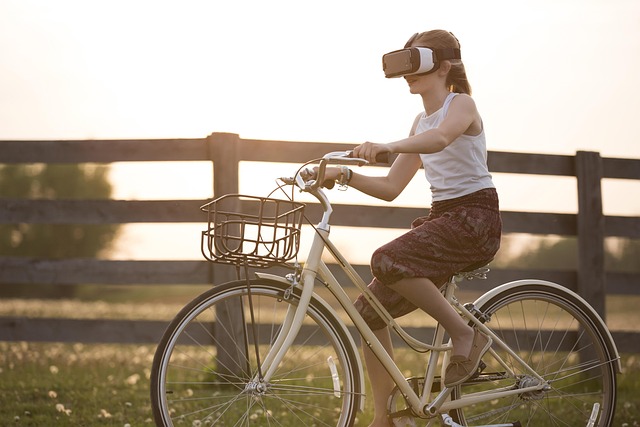

Education has long relied on textbooks, lectures, and hands‑on labs to convey concepts. As digital technologies mature, virtual reality teaching methods offer a dynamic shift from passive learning to embodied experiences. When combined with augmented reality and the expanding metaverse, educators can create environments where students explore, experiment, and collaborate in ways that mirror real‑world complexity while remaining safely within a controlled digital setting.
From Simulation to Immersion: A Brief History
The journey began in the 1960s with the first head‑mounted displays, designed for flight simulation. Over decades, the cost of graphics processing and head‑mounted peripherals dropped, making virtual reality teaching methods accessible to schools and universities. Parallel development in augmented reality in the 1990s introduced overlaying digital information onto the physical world. Today, the metaverse—a persistent, shared virtual space—unifies these technologies, allowing continuous, cross‑platform interaction.
Defining the Core Technologies
- Virtual Reality (VR): A fully immersive, computer‑generated environment that surrounds the user’s visual and sometimes auditory senses.
- Augmented Reality (AR): The superimposition of digital objects onto a live view of the real world, typically via smartphones or smart glasses.
- Metaverse: An expansive, interconnected digital universe that supports persistent virtual worlds, social interaction, and economic exchange.
While VR offers isolation for deep focus, AR enhances the physical classroom by adding contextual layers. The metaverse combines both, creating shared spaces where learners from disparate locations can meet in a common, persistent environment.
Why Virtual Reality Teaching Methods Matter
Research indicates that immersive learning boosts retention, motivation, and spatial reasoning. VR allows students to “walk through” complex molecules, “drive” a spacecraft, or “participate” in historical events. Such embodied cognition aligns with constructivist theory, where knowledge emerges through active, sensory engagement.
“Virtual reality teaching methods transform abstract concepts into tangible experiences, making learning not just something you study, but something you do.”
Key Pedagogical Principles for VR
- Presence and Engagement: Create a believable environment that draws students into the learning narrative.
- Interactive Feedback: Provide real‑time responses to user actions, reinforcing causal understanding.
- Scaffolding: Layer difficulty progressively, ensuring novices can build confidence before tackling advanced scenarios.
- Collaborative Space: Enable multi‑user interactions to mimic real‑world teamwork and discussion.
Augmented Reality in the Classroom
AR blends the digital and physical, making it ideal for field trips, lab work, and contextual learning. Students can point a tablet at a plant and receive data about its species, growth stage, and care instructions. AR overlays can turn static diagrams into interactive 3D models that rotate, dissect, or animate on demand.
Unlike VR, AR requires no headset, reducing barriers to adoption. It also preserves the social context of the classroom, allowing peers to share observations in real time.
Augmented Reality Teaching Methods
- Layered Annotation: Students annotate a physical object with virtual notes that appear on their device.
- Virtual Lab Assistants: AR guides step‑by‑step procedures in a chemistry or physics lab.
- Spatial Storytelling: Historical artifacts are brought to life with animated narratives tied to the learner’s location.
The Metaverse as a Learning Ecosystem
The metaverse expands beyond isolated lessons. It offers persistent worlds where curriculum is modular, resources are shared across institutions, and learners can explore beyond the boundaries of their local school. In this environment, virtual teachers can conduct live lectures, host debates, and facilitate peer‑to‑peer tutoring, all within a shared digital space that maintains continuity over time.
Metaverse‑Based Teaching Methods
- Persistent Classrooms: Students return to the same virtual space, where their progress is saved and new content is added organically.
- Marketplace for Educational Assets: Educators trade lesson plans, 3D models, and interactive simulations.
- Cross‑Institutional Collaborations: Universities, schools, and museums connect, allowing joint projects that span disciplines and borders.
Implementing VR, AR, and Metaverse Pedagogy
Adoption requires careful planning. Schools must evaluate hardware, software, curriculum alignment, and teacher training. Funding models can include grants, partnerships with tech companies, and community‑based crowdfunding. Pilots should start with small, focused units to measure learning outcomes before scaling.
Equity is a critical concern. Ensuring all students have access to compatible devices, high‑bandwidth internet, and supportive environments prevents a digital divide that could exacerbate existing disparities.
Professional Development for Educators
- Technical workshops on headset setup and application deployment.
- Design thinking sessions for creating immersive lesson plans.
- Assessment strategies that capture experiential learning outcomes.
Case Studies in Action
In a high‑school biology class, VR teaching methods allowed students to navigate the human circulatory system, experiencing blood flow and cellular interactions firsthand. The immersive module increased test scores by 18% compared to traditional instruction. Meanwhile, a middle‑school history teacher used AR to overlay battle reenactments onto the school courtyard, fostering engagement and contextual understanding.
At a university level, a metaverse lab enabled researchers across continents to manipulate a shared 3D model of protein structures, accelerating hypothesis testing and fostering international collaboration.
Future Directions and Emerging Trends
Artificial intelligence is increasingly integrated into VR and AR experiences, providing adaptive narratives that respond to learner behavior. Haptic feedback devices add tactile sensations, bridging the gap between virtual and real. Meanwhile, blockchain‑based credentialing could verify learning achievements within the metaverse, giving students portable, verifiable skill records.
As standards evolve, interoperability will become paramount. Open‑source platforms and cross‑vendor APIs will allow educators to combine the best tools from different ecosystems, ensuring long‑term sustainability of immersive learning environments.
Conclusion
Virtual reality teaching methods, augmented reality enhancements, and the broader metaverse collectively represent a transformative shift in education. They move the classroom beyond static walls, offering learners experiences that are vivid, interactive, and contextually rich. By thoughtfully integrating these technologies—considering pedagogy, equity, and professional development—educators can harness the full potential of immersive learning to prepare students for a rapidly evolving world.