
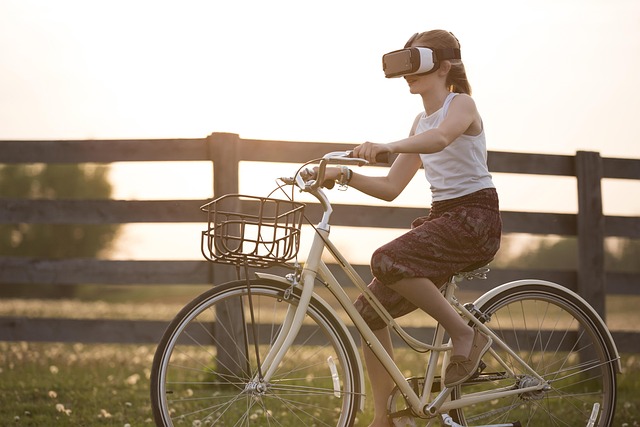

For decades, the educational landscape has been shaped by textbooks, chalkboards, and increasingly, digital screens. In the last ten years, however, a new layer of learning has begun to emerge from the intersection of hardware innovation and pedagogical theory. This layer—known as immersive technology—offers students the chance to step into a virtual classroom, manipulate abstract concepts with their hands, and experience distant cultures as if they were physically present. The driving force behind this revolution is the rapid development of virtual reality applications in education, a field that marries software design, cognitive science, and user experience to create learning environments that feel both familiar and fantastical.
The Core Components of Immersive Learning
Immersive learning environments are built upon three foundational pillars: presence, interactivity, and contextual relevance. Presence refers to the user’s sensation of “being there” within a digital space, a quality that virtual reality (VR) excels at delivering through stereoscopic displays and head‑tracked movement. Interactivity is achieved by allowing learners to manipulate virtual objects, triggering immediate feedback that reinforces understanding. Contextual relevance is the alignment of virtual scenarios with real‑world applications, ensuring that skills practiced in the VR environment translate to tangible outcomes outside the headset.
- Presence: Achieved via high‑resolution optics and low‑latency tracking.
- Interactivity: Facilitated by hand‑tracking, motion controllers, and haptic feedback.
- Contextual Relevance: Anchored through curriculum alignment and assessment tools.
Virtual Reality Applications in Education: A Multidisciplinary Perspective
When educators talk about virtual reality applications in education, they often emphasize the technology’s ability to support experiential learning. From simulating the human bloodstream to reconstructing ancient civilizations, VR provides a sandbox where theoretical knowledge meets sensory engagement. Cognitive research indicates that multisensory stimulation can enhance memory consolidation, particularly for spatial and procedural content. This synergy between VR and learning science explains why virtual reality applications in education are now appearing in science labs, history museums, and language studios alike.
“The best VR experiences are those that feel like natural extensions of our existing knowledge rather than gimmicks,” says Dr. Elena Morales, a cognitive neuroscientist studying learning in virtual environments.
Augmented Reality: Bridging the Physical and Digital Worlds
While virtual reality offers an entirely simulated space, augmented reality (AR) overlays digital information onto the real world. In classrooms, AR can bring 3‑D models to the desk or display contextual annotations over physical artifacts. For example, a biology teacher can point a tablet at a plant specimen and trigger a holographic cross‑section, revealing chloroplasts and stomata in real time. The blending of AR with virtual reality applications in education provides a continuum of immersion, allowing educators to choose the appropriate level of digital intervention based on learning objectives.
The Metaverse as the Next Frontier
The term “metaverse” has entered mainstream discourse as a vision of a persistent, shared virtual space where people can work, play, and learn. For education, the metaverse offers a platform that transcends traditional boundaries: schools can host virtual campuses, alumni can meet in virtual hallways, and international collaborations can occur in shared labs without the need for travel. These possibilities hinge on robust, scalable infrastructure and open standards that ensure interoperability among different virtual reality applications in education.
- Persistent environments that retain user progress over time.
- Social affordances that enable collaboration across geographic distances.
- Economic models that support sustainable content creation.
Real‑World Case Studies
Numerous schools and universities have begun to pilot immersive learning programs with encouraging results. In a middle‑school biology class, students used VR headsets to navigate the human heart, feeling the rhythm of blood flow in a way that textbook diagrams could never convey. A university chemistry lab incorporated VR simulations that allowed students to safely experiment with hazardous reactions, recording data that fed directly into the university’s research database. These examples illustrate how virtual reality applications in education can democratize access to experiences that would otherwise be too costly, dangerous, or logistically impossible.
Assessment and Pedagogical Integration
Integrating immersive technology into curricula requires careful alignment with assessment frameworks. Traditional multiple‑choice exams may not fully capture the depth of understanding gained through VR experiences. Therefore, educators are developing new assessment tools, such as reflective journals that accompany VR labs, performance‑based tasks where students demonstrate mastery by navigating a virtual environment, and analytics dashboards that track engagement metrics. These methods help ensure that virtual reality applications in education are not just novel add‑ons but integral components of a holistic learning strategy.
Accessibility and Equity Considerations
While the promise of immersive learning is vast, it also raises questions about equitable access. High‑end headsets and powerful computers can be prohibitively expensive for underfunded schools. To mitigate this, some districts are adopting low‑cost, smartphone‑based VR solutions that still provide significant experiential value. Additionally, developers are increasingly focused on designing inclusive experiences that accommodate users with visual, auditory, or motor impairments. By prioritizing accessibility from the outset, the potential for virtual reality applications in education to serve diverse populations expands dramatically.
Future Trends and Emerging Technologies
Looking ahead, several emerging technologies are poised to enhance the effectiveness of virtual reality applications in education. Haptic gloves that simulate touch will add another layer of realism, enabling students to feel the texture of a historical artifact or the pressure of a scientific instrument. Eye‑tracking will allow content to adapt dynamically to the learner’s focus, providing targeted prompts or deeper explanations. Meanwhile, advances in artificial intelligence will enable virtual tutors that can personalize instruction in real time, creating a truly adaptive learning ecosystem.
Conclusion: Toward a More Immersive, Inclusive Future
The integration of virtual reality, augmented reality, and metaverse concepts into education represents a paradigm shift that transcends incremental upgrades. Instead of merely adding digital layers to existing methods, these technologies invite educators to rethink the very nature of instruction, assessment, and collaboration. As virtual reality applications in education continue to mature, they promise not only richer learning experiences but also a more inclusive, accessible, and interconnected educational landscape. By embracing these tools thoughtfully, schools and universities can prepare learners to thrive in a world where imagination and technology increasingly coalesce.