
Education has always thrived on exploration. Whether it is a field study of the local riverbank or a grand tour of the Louvre, the idea of stepping outside the classroom is central to learning. In the last decade, the notion of “virtual school trips” has evolved from a novelty to a practical tool that can deliver immersive experiences to classrooms worldwide. The rise of virtual reality (VR), augmented reality (AR), and the burgeoning metaverse offers new possibilities for students to visit remote museums, explore ancient ruins, or conduct science experiments in an environment that is safe, accessible, and rich in detail.
Virtual Reality: The Gateway to Immersive Learning
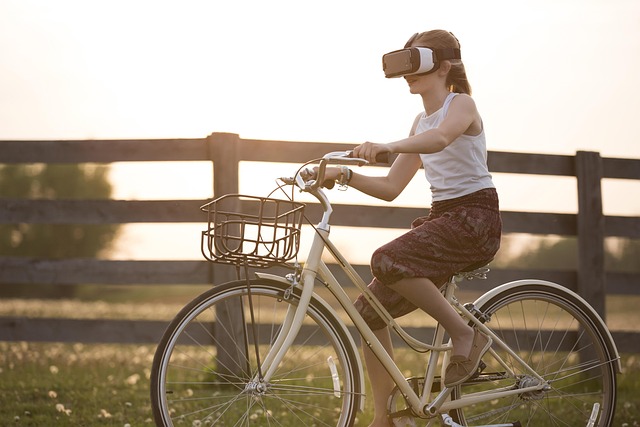
Virtual reality immerses users in a completely fabricated digital world that feels as real as possible. With a headset and motion tracking, students can “walk” down the halls of the Smithsonian, peer into the eye of a volcano, or observe the inner workings of a living cell. The level of sensory engagement—visuals, spatial audio, and sometimes haptic feedback—creates a strong emotional connection that traditional textbooks cannot match.
- High‑fidelity environments: Advanced rendering engines produce lifelike textures and lighting, allowing learners to notice subtle details.
- Interactive elements: Users can manipulate objects, trigger animations, or follow guided tours, turning passive observation into active participation.
- Safe experimentation: Complex or hazardous scenarios, such as spacewalks or deep‑sea dives, can be experienced without real‑world risk.
Augmented Reality: Layering Knowledge onto the Real World
Unlike VR, which creates a wholly digital space, AR overlays virtual content onto the real environment through smartphones, tablets, or smart glasses. In a classroom setting, a teacher can point a device at a textbook page, and a 3D model of the human heart will appear, spinning and labeling its parts. This “just‑in‑time” enrichment turns static images into dynamic learning tools.
- Contextual relevance: Students see how abstract concepts manifest in their own surroundings.
- Low‑cost accessibility: Most devices are already in students’ possession, reducing the need for expensive gear.
- Collaborative exploration: Multiple users can view the same AR object simultaneously, fostering teamwork.
The Metaverse: A Shared Virtual Ecosystem
While VR and AR are individual experiences, the metaverse envisions a shared, persistent virtual world where users can interact, create, and learn together. Think of it as a virtual campus that hosts classrooms, museums, laboratories, and even cultural festivals—all accessible through avatars. For students, this means being able to attend a lecture in a virtual university, collaborate on a science project with peers from another country, or even participate in a historical reenactment.
“In the metaverse, distance is not a barrier; it becomes a dimension for exploration.”
Implementing Virtual School Trips in the Classroom
Teachers who wish to incorporate virtual trips must start with clear learning objectives. Here are practical steps to integrate VR, AR, and metaverse experiences seamlessly:
- Align with curriculum: Choose content that supports existing standards—be it geography, history, or science.
- Prepare pre‑trip activities: Provide background reading or videos so that students can ask informed questions.
- Design post‑trip reflections: Use journals, quizzes, or group discussions to cement knowledge.
- Ensure technical readiness: Test devices, update software, and troubleshoot connectivity issues before the lesson.
Benefits of Virtual School Trips
Beyond the obvious thrill, virtual trips offer measurable educational gains:
- Engagement: Immersive environments capture attention, leading to higher participation rates.
- Inclusivity: Students with mobility challenges or financial constraints can access world‑class experiences.
- Repetition: Learners can revisit sites multiple times, reinforcing concepts through spaced repetition.
- Cross‑disciplinary learning: A single VR tour can integrate history, science, art, and technology simultaneously.
Challenges and Considerations
While promising, virtual trips are not without hurdles. Educators must weigh the following factors:
- Cost of equipment: High‑end VR headsets remain expensive, though prices are decreasing.
- Digital divide: Schools in low‑resource areas may lack reliable internet or devices.
- Content quality: Not all virtual environments are pedagogically sound; critical evaluation is essential.
- Screen fatigue: Prolonged use of headsets can lead to discomfort or headaches.
- Privacy and data security: Many platforms collect user data; schools must ensure compliance with regulations.
Future Outlook: Toward Seamless Immersive Learning
As hardware becomes lighter, battery life extends, and network speeds accelerate, the barriers to widespread virtual school trips will continue to shrink. Artificial intelligence is already enabling dynamic content creation, personalized pathways, and real‑time language translation within virtual environments. Moreover, open‑source ecosystems are fostering community‑driven educational resources that can be shared across borders.
In the next decade, we can anticipate a blended model where VR, AR, and the metaverse coexist harmoniously with traditional teaching. Students may start a lesson in a classroom, transition to an AR overlay for deeper exploration, and conclude with a collaborative metaverse session where they apply what they have learned to solve a global problem.
Conclusion
The concept of virtual school trips is more than a technological trend; it is a pedagogical shift that places experience at the heart of learning. By harnessing virtual reality’s immersive depth, augmented reality’s contextual immediacy, and the metaverse’s collaborative potential, educators can create environments where curiosity thrives and knowledge becomes tangible. As schools navigate the evolving digital landscape, thoughtful implementation, equitable access, and rigorous content standards will determine whether virtual trips become a permanent staple of education or a fleeting novelty. The future promises that every student, regardless of geography or circumstance, can step into the world of learning—virtually, vividly, and infinitely.