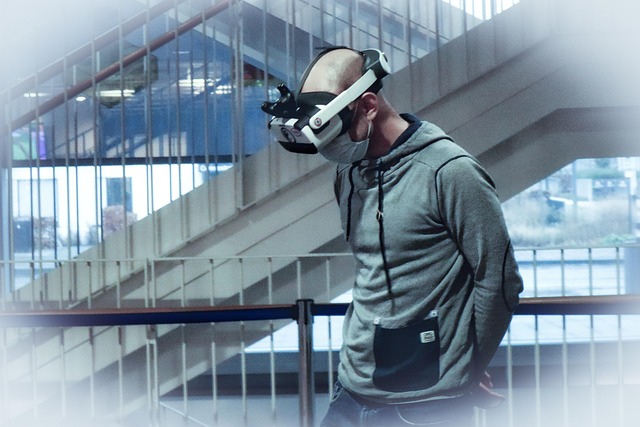


In recent years the lines between physical experience and virtual immersion have blurred, creating a dynamic landscape where technology, human perception, and creative design intersect. The term “digital sensitivity” has emerged as a central concept, describing the subtle adjustments in sensor calibration, algorithmic inference, and user interface that enable a more authentic, responsive, and intuitive interaction with virtual worlds. This article explores how digital sensitivity is reshaping the fields of virtual reality (VR), augmented reality (AR), and the broader metaverse, while also outlining the practical implications for designers, developers, and end users.
Defining Digital Sensitivity in Interactive Media
Digital sensitivity refers to the system’s ability to detect, interpret, and react to minute changes in user input or environmental variables. In VR and AR, this concept is applied to a range of components: motion tracking, haptic feedback, eye‑tracking, voice recognition, and even ambient sound processing. Each element requires fine‑tuned calibration so that the digital representation of the user’s actions feels natural and unintrusive.
- Precision in motion capture: Small discrepancies between a user’s physical movement and the virtual avatar’s motion can break immersion.
- Latency reduction: Even milliseconds of delay can produce a disconcerting lag, highlighting the importance of low‑latency pipelines.
- Adaptive algorithms: Machine learning models that adjust thresholds in real time help maintain responsiveness across varied user contexts.
The Human Perception Factor
Human perception is not a binary response system; it operates on a continuum of thresholds and sensitivities. Understanding these thresholds is essential for designing VR and AR experiences that feel seamless. Studies in psychophysics show that the human visual system can detect changes as small as 1/100th of a degree of visual angle, while proprioceptive sensitivity allows for nuanced detection of bodily movement. Digital sensitivity must mirror these biological sensitivities.
“The goal of digital sensitivity is not to replicate the real world exactly, but to approximate it closely enough that the brain’s predictive models cannot distinguish the virtual from the physical.” – Dr. Elena Morales, Cognitive Systems Researcher
VR: From Motion Tracking to Immersive Presence
Virtual reality relies heavily on head‑mounted displays (HMDs) equipped with inertial measurement units, optical tracking cameras, and sometimes inside‑out tracking systems. The core challenge is aligning the virtual camera’s orientation and position with the wearer’s actual head movements. Even a slight misalignment can cause motion sickness or break the sense of presence.
Recent hardware iterations have pushed the boundaries of sensor fusion, integrating gyroscopes, accelerometers, magnetometers, and depth cameras to achieve sub‑millimeter positional accuracy. Meanwhile, firmware updates now include adaptive drift correction algorithms that learn individual head motion patterns, improving digital sensitivity over time.
Haptic Integration and Force Feedback
Beyond visual fidelity, VR experiences demand tactile realism. Haptic gloves, exoskeletons, and vibrotactile suits provide force feedback that aligns with digital sensitivity. The responsiveness of these systems depends on the sensor’s ability to detect pressure changes within milliseconds, ensuring that a virtual object’s weight or texture feels authentic. Developers now use physics engines that predict contact forces in real time, feeding data back to haptic devices with unprecedented precision.
AR: Layering Digital Sensitivity onto the Physical World
Augmented reality superimposes digital information onto the real environment, requiring robust spatial mapping and object recognition. Digital sensitivity in AR focuses on accurately tracking environmental features and aligning virtual objects with physical surfaces.
- Feature matching: Modern AR toolkits employ keypoint detectors that can identify and match thousands of features across frames, allowing for high‑confidence pose estimation.
- Depth estimation: LIDAR sensors and time‑of‑flight cameras provide depth maps, improving the placement of virtual elements in 3D space.
- Lighting adaptation: Real‑time illumination estimation adjusts the shading of virtual objects to match ambient lighting, enhancing integration.
Environmental Sensing and Contextual Awareness
As AR devices become more contextually aware, they can adapt to user intent and environmental changes. For instance, a smart table with embedded sensors can detect when a user’s hand enters the workspace and trigger a digital overlay. This level of digital sensitivity allows for more natural interactions, such as pulling a virtual knob that behaves exactly like its physical counterpart.
The Metaverse: A Unified Ecosystem of Digital Sensitivity
When VR and AR converge within the metaverse, digital sensitivity must scale to accommodate diverse devices, networked interactions, and complex user ecosystems. The metaverse is envisioned as a persistent, shared space where users can create, transact, and collaborate across multiple modalities.
Key challenges include:
- Cross‑platform consistency: Ensuring that a digital object behaves the same on a high‑end VR rig and a lightweight AR smartphone.
- Latency distribution: Managing real‑time data flows across continents to preserve immersion.
- Personalization: Adapting sensory output to individual preferences, such as adjusting haptic intensity or visual contrast.
Networked Sensitivity and Edge Computing
The metaverse demands rapid data processing at the edge. Edge servers now host machine‑learning models that interpret user inputs and deliver responsive outputs with negligible delay. This proximity reduces the perceived latency, enhancing digital sensitivity across distributed users.
Design Principles for Maximizing Digital Sensitivity
To build experiences that feel genuinely responsive, designers must adopt a holistic approach that considers hardware, software, and human factors.
- Calibration and Personalization: Allow users to perform quick calibration routines that adjust sensor sensitivity to their physiology.
- Feedback Loops: Implement multi‑modal feedback (visual, auditory, haptic) that reinforces the system’s interpretation of user actions.
- Adaptive Algorithms: Use reinforcement learning to continuously refine sensitivity thresholds based on usage patterns.
- Accessibility: Design sensitivity ranges that accommodate users with varying motor abilities and sensory conditions.
- Testing and Iteration: Conduct rigorous user studies focusing on edge cases—such as sudden motion or low lighting—to identify sensitivity gaps.
Future Directions and Emerging Technologies
The quest for perfect digital sensitivity will likely benefit from several emerging technological strands:
- Brain‑computer interfaces (BCIs) that interpret neural signals, potentially bypassing physical motion entirely.
- Quantum sensors capable of detecting infinitesimal changes in motion or magnetic fields, further tightening the loop between user and virtual world.
- Generative AI that can fill in missing sensory data in real time, smoothing out inconsistencies caused by sensor dropout.
Conclusion: The Imperative of Sensitivity in Immersive Interaction
Digital sensitivity is no longer a peripheral concern; it is the linchpin that determines whether a virtual environment feels real or merely simulated. As VR and AR continue to evolve and merge into the metaverse, the refinement of sensors, algorithms, and human‑centered design practices will dictate the quality of user experience. By investing in precise calibration, adaptive feedback, and cross‑device consistency, creators can ensure that digital worlds respond to the smallest of gestures with the same fluidity and fidelity as the physical world. The future of immersive interaction depends on this meticulous alignment between human perception and digital representation.