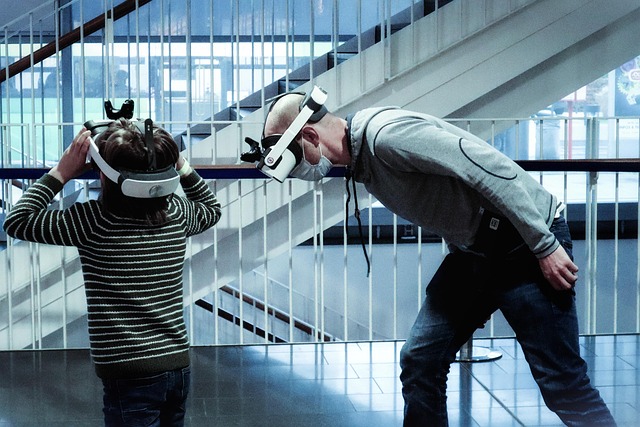
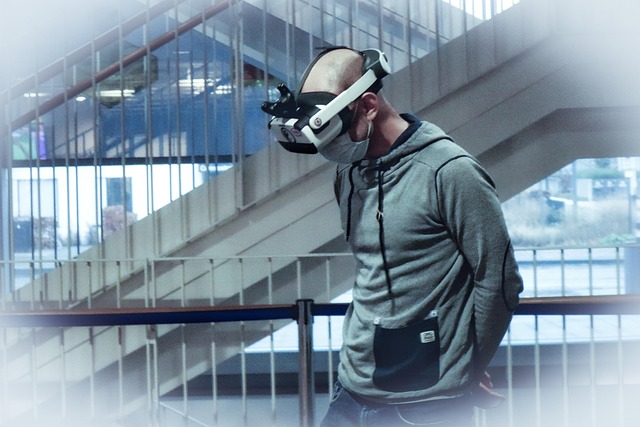

For gamers and narrative designers alike, the concept of VR storytelling has evolved beyond simple gameplay into a fully realized medium where story, environment, and player agency intertwine.
When a player steps into a virtual realm, the boundaries between observer and participant dissolve, allowing narrative beats to unfold in three dimensions.
This shift has pushed developers to rethink how to convey plot, character, and emotional stakes within immersive spaces.
Foundations of Immersive Narrative Design
At its core, VR storytelling relies on spatial audio, haptic feedback, and motion tracking to create believable worlds.
These sensory layers provide cues that guide players through story arcs without explicit dialogue or text overlays.
Successful games use environmental storytelling, where the layout of a ruin or the layout of a bustling city speaks volumes about history and conflict.
- Lighting variations hint at moral ambiguity or impending danger.
- Interactive objects trigger memories or plot revelations when examined closely.
Player Agency as a Narrative Engine
Unlike linear narratives, VR storytelling thrives on branching paths that arise from player choice.
When a character offers a side quest, the player can decide to ignore it, thereby altering the story’s direction and emotional payoff.
“Choice becomes a tangible mechanic; the weight of a decision is felt through the resistance of a virtual arm,” a designer once remarked.
The Role of Augmented Reality in Expanding Narrative Horizons
Augmented reality (AR) layers digital storytelling onto the real world, creating hybrid narratives that blend physical and virtual cues.
In AR games, clues appear on the surface of a coffee table, and a character’s voice emerges from a nearby streetlamp.
These experiences demand careful design to maintain immersion while preventing sensory overload.
- Spatial coherence: Ensure that virtual objects respect real-world physics.
- Contextual relevance: Align narrative content with the player’s immediate environment.
Temporal Dynamics in Immersive Worlds
Time is a crucial variable in VR storytelling; it can be manipulated to create urgency, suspense, or a sense of timelessness.
Dynamic weather systems, evolving day-night cycles, and narrative events that shift over real-world hours add depth to player experience.
When a city skyline gradually burns, the player’s sense of urgency mirrors the narrative stakes.
Metaverse: The Next Frontier for Narrative Integration
The metaverse represents a persistent, shared virtual space where storytelling can transcend individual titles.
Persistent worlds allow characters and plotlines to evolve continuously, creating living narratives that span multiple players and sessions.
Developers are experimenting with cross-title lore threads, where a hero’s journey in one game influences events in another.
- Shared economies enable players to invest in narrative outcomes.
- Community-driven storytelling allows fan creations to become canonical elements.
Social Interaction as a Narrative Catalyst
In a metaverse, dialogue and collaboration between avatars can generate emergent storylines.
Players can form guilds, negotiate alliances, or stage spontaneous performances, each contributing to the evolving narrative fabric.
When a group of players collectively solves a mystery, the story is not authored by a single designer but by the community’s shared actions.
Technical Challenges and Solutions
Building believable VR storytelling experiences demands significant computational resources.
Real-time rendering, physics simulation, and network synchronization must all operate seamlessly to maintain immersion.
Engine optimizations, level-of-detail scaling, and predictive networking are common techniques to reduce latency.
- Asset streaming: Load high-resolution assets only when they enter the player’s field of view.
- Event prediction: Anticipate player actions to prefetch relevant narrative content.
Ethical Considerations in Immersive Narratives
As VR storytelling becomes more emotionally engaging, developers face ethical questions regarding player manipulation.
The power to trigger intense emotional responses through immersive environments necessitates responsible design choices.
Clear consent mechanisms and options to pause or exit distressing scenes are increasingly common safeguards.
Case Studies of Innovative VR Storytelling
Several titles have set new standards for how stories can be told within immersive worlds.
One game uses a fractured cityscape to explore themes of memory and identity, allowing players to piece together narrative fragments through exploration.
Another title incorporates live theater performances that players can attend virtually, merging real-time acting with persistent story arcs.
- Player choices directly influence which scenes are available at any given time.
- Narrative continuity is preserved through a shared database of player actions.
Cross-Platform Narrative Consistency
For stories to feel cohesive across VR, AR, and metaverse platforms, designers must create adaptable narrative frameworks.
Modular story units that can be rendered at different levels of immersion enable consistent plotlines regardless of device.
Unified narrative engines track player progress across devices, ensuring that choices made in one context carry weight in another.
Future Directions for VR Storytelling
Emerging technologies like brain-computer interfaces and advanced haptic suits promise to deepen immersion and narrative realism.
With finer control over physiological responses, designers can tailor story beats to individual player emotions.
Adaptive storytelling systems that learn from player preferences may produce ever-evolving narratives tailored to each user.
Community Collaboration in Narrative Development
As open-world platforms mature, player-generated content will increasingly shape canonical stories.
Tools for modding and narrative scripting empower fans to write and publish their own episodes.
Game studios can curate these contributions, blending community creativity with professional storytelling standards.
Conclusion: The Growing Art of Immersive Storytelling
VR storytelling is no longer a niche pursuit; it has become a central pillar of modern gaming culture.
By combining spatial design, player agency, and persistent worlds, creators can craft experiences that resonate on a deeply personal level.
As technology continues to evolve, the lines between player, character, and narrative will blur further, offering unprecedented opportunities for immersive storytelling.